 Campaign for Patient Access


A national public affairs campaign launched by the American College of Cardiology in December 2009 to oppose Medicare physician fee schedule cuts affecting cardiology patients and practices.
About the Campaign
The Campaign for Patient Access was launched by the American College of Cardiology in December 2009 as a national effort to reverse Medicare physician fee schedule cuts that threatened cardiovascular care. The site provided background on the issue, the ACC's legislative and legal response, resources for patients and practices, a newsroom tracking coverage across the country, and ways for supporters to share their stories and support the campaign.
From the Newsroom
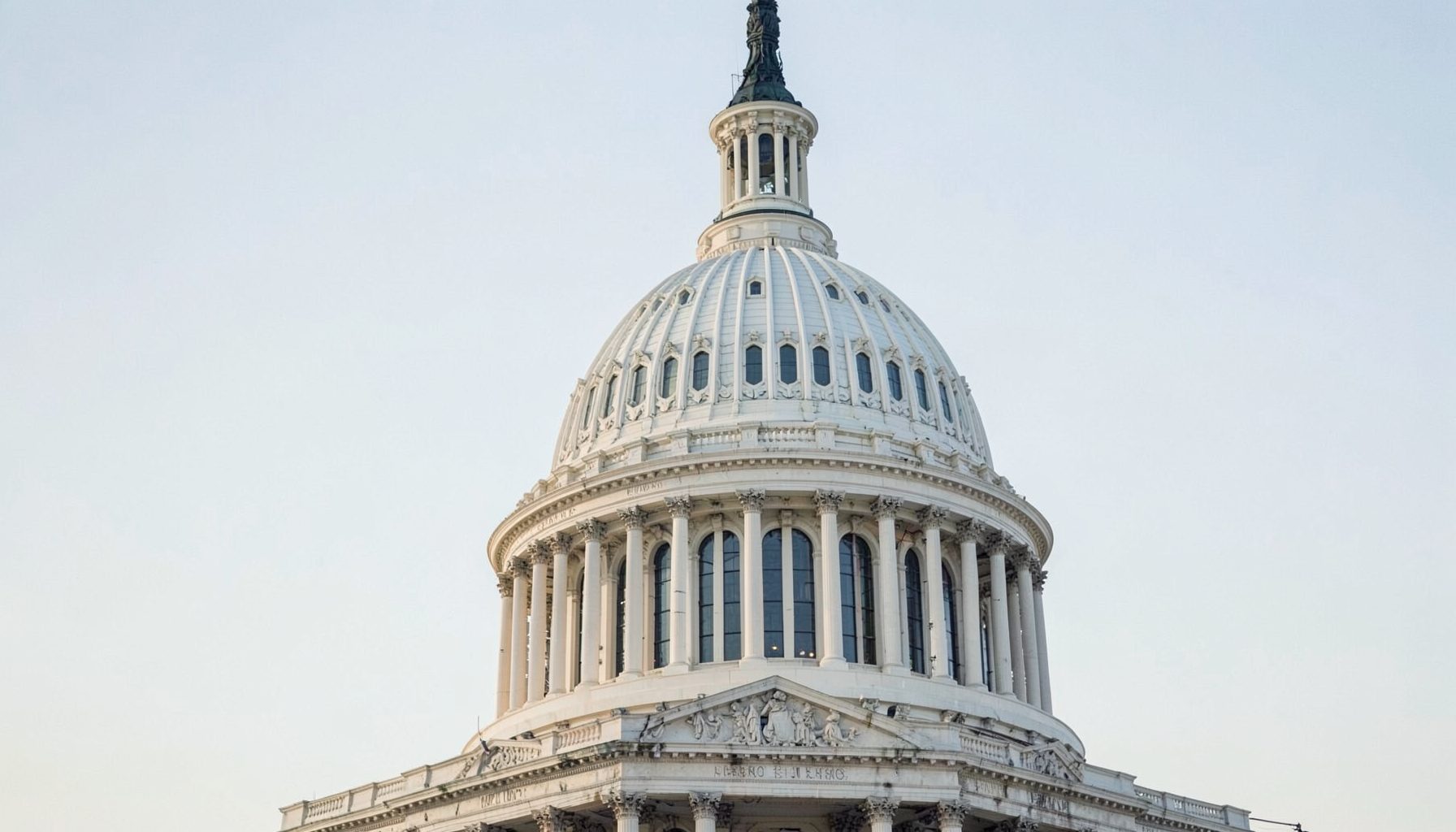
Medicare Meltdown: Access to Health Care in "Critical Condition"
A press release warning that cardiology access was in critical condition due to Medicare payment cuts.
Read more
Cardiology Takes Legal Action Against Medicare
The ACC filed suit against HHS Secretary Kathleen Sebelius over the 2010 Physician Fee Schedule.
Read more
ACC Statement on Health Care Reform
The ACC used the State of the Union address to highlight the need to reverse the Medicare cuts.
Read more
Medicare Patients and Physicians Join Petition Drive
Patients and physicians in Washington, DC joined a petition drive calling on Congress for Medicare reform.
Read moreCardiac ultrasound training faces mounting funding pressure
For the better part of two decades, Medicare physician fee schedule cuts have been the focus of vigorous debate. When reimbursement for cardiology services shrinks, the immediate victims are the practices providing care. Behind them, though, sits a quieter casualty: the trainees learning the craft. Echocardiography training requires long hours at the console, supervised reads, and exposure to a high volume of cases. None of that is free.
In Australia, the conversation plays out differently on the surface, because the funding mix blends Medicare rebates, private health funds, and state hospital budgets. The mechanics are not identical to those in the United States, yet the pressure feels familiar. When fee schedules tighten, hospitals trim the discretionary spending that keeps teaching programs alive, and the pipeline of sonographers and cardiology registrars begins to narrow.
How reimbursement cuts ripple through fellowship training
Cardiology fellowships have always relied on a quiet subsidy: the revenue generated by senior staff, which pays for the time senior staff spend teaching. Cut that revenue, and you cut the time available for supervision. A trainee who once spent three afternoons a week in the echo lab may now spend one, with the remaining sessions absorbed by patients whose billing keeps the lights on.
Australian teaching hospitals feel this in a particular way. An advanced trainee at Royal Prince Alfred, for example, might log more than 1,200 supervised transthoracic studies over the course of a fellowship. That number is the threshold most colleges expect before crediting competency. If the volume drops because the lab is running fewer lists, the registrar simply does not hit the target. The same dynamic affects stress echo, transoesophageal work, and structural imaging exposure.
Then there is the cost of the machines themselves. A modern cart-based system runs into six figures. Service contracts, probes, and IT integration are ongoing. When margins on studies narrow, capital budgets are the easiest place to find savings. Older machines stay in service longer. Trainees learn on equipment that is a generation behind what they will encounter in private practice.
Why cardiology departments are rethinking echocardiography rotations
Department heads know that echo is a foundational skill. Without it, registrars cannot read valve function, assess heart failure, or support structural intervention programs. Yet echo is also expensive relative to its reimbursement in many schedules. The economics have prompted some departments to compress rotations, sending trainees through faster but shallower experiences. A two-year attachment might shrink to eighteen months, with competence assessed at lower case volumes.
The Australian private sector absorbs a fair share of complex imaging, but the training footprint sits largely in public hospitals. When those hospitals tighten, the private rooms offer limited relief because they prioritise throughput over pedagogy. Registrars attached to private lists often observe rather than scan, which builds familiarity but does not satisfy credentialing requirements.
There is also a generational consideration. Supervisors who trained in the 1990s and 2000s did so when fee schedules were more generous relative to costs. They carry a mental model of how training should run. When the funding environment shifts underneath them, the natural response is to absorb the squeeze personally, working longer hours and accepting reduced support. That instinct is admirable, but it is not sustainable across a whole department, and it tends to burn out the very people who hold the training program together.
The rural and remote Australian reality
Outside the capital cities, the consequences of these cuts are felt most sharply. Cardiac ultrasound access in towns like Broken Hill, Mt Isa, and Tennant Creek often depends on a single visiting sonographer or a fly-in fellow from a metropolitan network. When training pipelines thin at the metropolitan end, the regional end eventually starves.
The mathematics is unforgiving. A registrar who completes fellowship in a city and considers a rural posting usually does so because they have had meaningful exposure during training. If their fellowship was compressed and their case mix narrow, the thought of flying out solo to a remote clinic, often with a machine that needs servicing and no senior on call, loses its appeal. The fly-in fly-out model keeps services running, but it does not build local capacity.
Indigenous health adds another layer. Cardiac disease in Aboriginal and Torres Strait Islander communities runs at higher rates and presents earlier. Reliable echocardiography at community-controlled health services, backed by visiting cardiologists, can catch rheumatic heart disease and other conditions before they become catastrophic. When training budgets are cut, the specialists who could staff these visits are simply less numerous.
Australians have a habit of saying "she'll be right" when systems bend, and cardiac care has bent and recovered many times. The current squeeze, though, is structural rather than cyclical, and the usual resilience may not be enough.
University teaching hospitals carry the brunt
| Training setting | Echo case volume per trainee | Supervision ratio | Exposure to complex pathology |
|---|---|---|---|
| Metropolitan teaching hospital (e.g. Royal Adelaide, Royal Melbourne) | 1,200–1,500 studies | 1 supervisor to 2 trainees | High – structural, congenital, transplant |
| Regional referral centre (e.g. Townsville, Cairns) | 600–900 studies | 1 supervisor to 3–4 trainees | Moderate – general cardiology, some valve |
| Rural outreach or visiting service | 150–300 studies | Often solo with remote consult | Limited – mostly screening and follow-up |
This table makes the geography of supervision matter. As reimbursement is squeezed, the first places to feel it are the metropolitan teaching hospitals where the heaviest investment in training sits. Those hospitals are also the only settings where a registrar can reliably log the case mix required for credentialing in stress echo, transoesophageal imaging, and congenital heart disease. If their training programs contract, the regional and rural services downstream lose their feeder pipeline.
Australia's university hospitals also do the bulk of research that improves the field. Registrar-led projects, audit work, and quality improvement studies all depend on protected time. Fee schedule reductions indirectly reduce that time as well, since the same budgets fund the administrative scaffolding. The result is fewer publications, fewer presentations at the Cardiac Society of Australia and New Zealand annual scientific meeting, and a thinner evidence base for the next generation to draw on.
Rebuilding a sustainable training pipeline
The structural problems above do not have a single fix, but a handful of practical moves can steady the situation.
- Protect training positions in public hospital budgets with line-item funding that cannot be redirected when fee schedules fluctuate
- Expand simulation-based echo education so trainees reach baseline competence before live scanning time, freeing clinical hours for higher-value learning
- Build formal partnerships between metropolitan hospitals and regional centres, with funded rotations that let registrars see rural practice during training
- Use store-and-forward telemedicine for remote echo reads, allowing rural sonographers to receive real-time feedback and build toward credentialing themselves
- Lobby for Medicare item numbers that recognise the additional time and expertise required for supervised training scans, not just the technical execution
- Strengthen mentorship pathways for Aboriginal and Torres Strait Islander trainees entering cardiology, who often face additional barriers to specialty training
- Invest in equipment replacement cycles so trainees learn on machines they will actually use in practice, rather than outdated stock
Long-horizon policy thinking, the kind behind a national recycling strategy, reminds us that essential services benefit from deliberate planning. Cardiac ultrasound training deserves the same deliberate protection.
Australians who care about the future of cardiology can do more than watch the budget papers. Write to your federal member about Medicare schedule reviews. Support the Heart Foundation, the Cardiac Society of Australia and New Zealand, and the Victor Chang and Baker institutes that advocate for training. Encourage junior doctors considering cardiology to keep going, even when the training pathway looks harder than it did for their supervisors. The people we train today are the ones who will be scanning hearts in Broken Hill, Mt Isa, and the suburbs of every capital city two decades from now. The cuts may be real, but the response is in our hands.